
Rousseau’s Changing Idea of Nature
The Social ContractThis flow follows how nature shifts from a polemical contrast with corrupt society into a deeper ideal of human capacity and freedom.
increasing Bearing strength in each event
 decreasing
Bearing strength in each eventdecreasingNature as Accusation
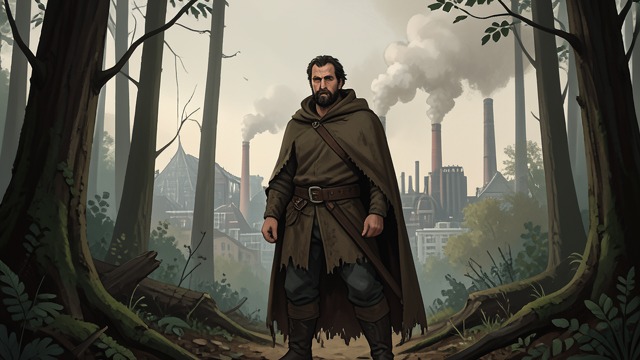
Nature as Accusation
A Single Contrast
Rousseau condemns modern civilization by contrasting it with a natural condition. In this early work, the opposition is forceful but not carefully qualified.
Rhetorical Function
Nature serves chiefly as a weapon against contemporary vanity and corruption. The argument’s limitations prompt later refinement rather than a settled historical theory.
Natural Man Abstracted
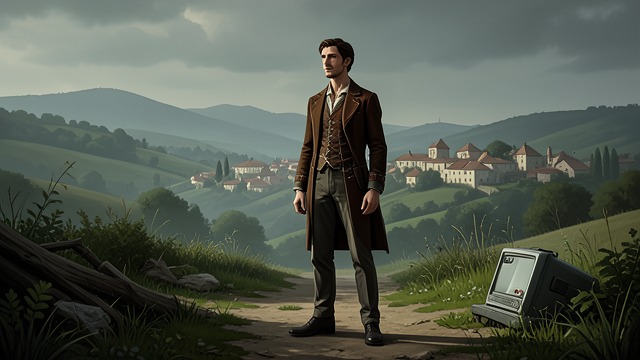
Natural Man Abstracted
A Thought Experiment
Rousseau describes natural humanity through abstraction from social life, explicitly not as a claim that this condition once existed in history.
A New Question
The imaginary figure clarifies what society adds or distorts. It also permits Rousseau to consider social development without treating a literal return to nature as possible.
Society Acknowledged
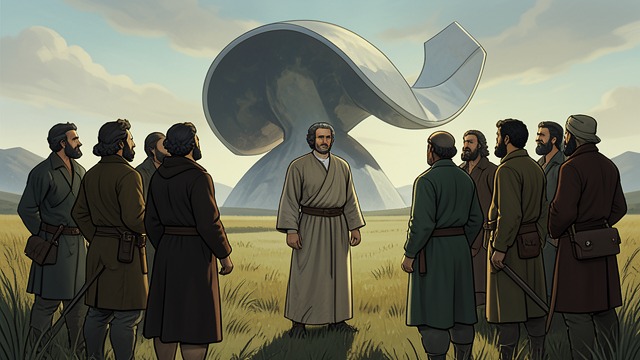
Society Acknowledged
No Simple Return
Rousseau recognizes that corruption has advanced too far for modern people to return to primitive independence. Society is an established condition that must be addressed.
Toward Reconstruction
The task shifts toward using human institutions more wisely. This adjustment prepares the way for a theory that can justify a rational form of association.
Freedom Replaces Origins
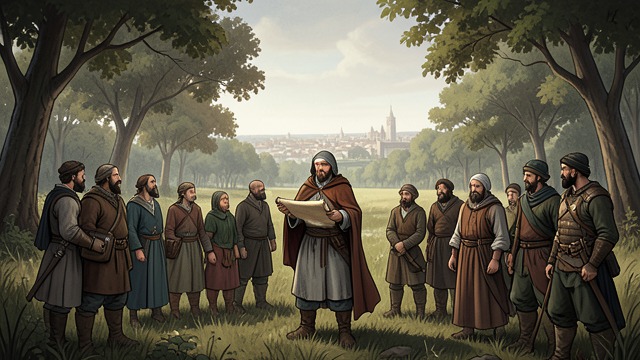
Freedom Replaces Origins
A Political Ideal
In the mature work, nature is less a remembered beginning than a way to describe freedom that legitimate society must preserve.
Civil Development
A political order can develop human capacities rather than merely restrict them. Natural liberty gives way to a social freedom grounded in common law.
Self-Rule Fulfilled
Self-Rule Fulfilled
Moral Agency
Rousseau distinguishes appetite from moral freedom. People become masters of themselves when they obey laws they prescribe as members of the public.
A Transformed Ideal
Nature’s political meaning is thus enlarged: freedom is not mere independence, but the full exercise of a rational and shared human capacity.
1750, in the first Discourse
1755, in the Discourse on Inequality
1755, in the Discourse on Inequality’s concluding reflections
1762, in the argument of The Social Contract
Book I, Chapter VIII, after entry into civil society
